
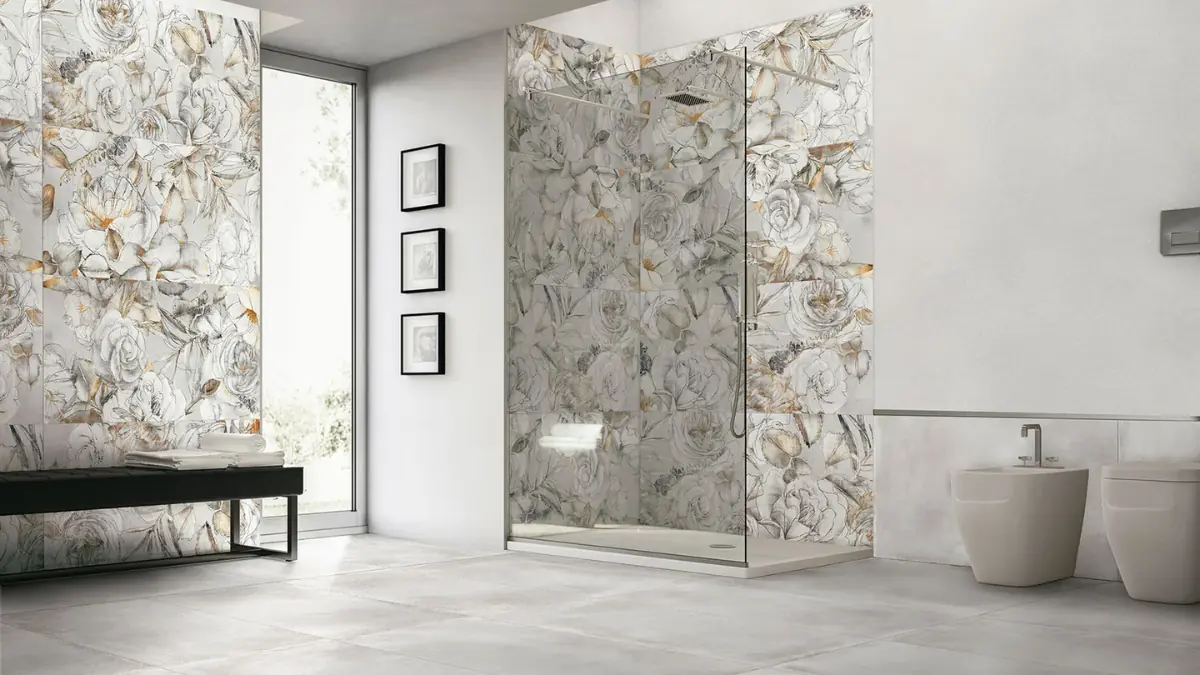
A luxury bathroom in the UK typically costs between £25,000 and £60,000 in 2026, with high-end and ultra-luxury projects reaching £80,000–£150,000 and beyond, depending on the size of the room, the grade of tile and brassware, and the depth of bespoke joinery and design involved. At the premium-entry end (£25,000–£35,000) you get designer-grade porcelain, branded sanitaryware and a properly project-managed installation. At the true luxury end (£60,000+) you move into large-format porcelain slabs, bespoke vanities, integrated lighting design, underfloor heating and statement brassware. These are typical, transparent 2026 UK market ranges, not fixed quotes; every project is priced individually once the room, specification and structural realities are understood. The single biggest variable is rarely the tiles themselves — it is the level of bespoke detail, the quality of the fittings, and the design and project management that ties it all together.
That is the honest, direct answer. But a number on its own tells you very little, because two bathrooms costing £40,000 can look and feel worlds apart. What you’re really buying at the luxury end is not a list of products; it’s a resolved, cohesive, beautifully finished space where every decision has been considered. In this guide, our design team at Design Di Lusso explains exactly what drives the cost of a luxury bathroom in 2026, what you get at each price tier, and, just as importantly, where your money is genuinely well spent and where it isn’t.
What counts as a “luxury” bathroom?
Before talking numbers, it’s worth defining the category, because “luxury” is used loosely. A standard bathroom renovation in the UK might use mass-market tiles, off-the-shelf sanitaryware and a general builder working to a fixed spec. A luxury bathroom is a different proposition entirely. It’s characterised by:
- Designer-grade materials — large-format porcelain, marble-effect or natural-stone-effect tiles, often laid with minimal grout lines for a seamless finish.
- Branded, designed sanitaryware and brassware — fittings chosen for both performance and aesthetics, not just price.
- Bespoke or semi-bespoke joinery — vanities, storage and panelling made to fit the room rather than bought as flat-pack.
- Engineered comfort — underfloor heating, proper wet-room tanking, considered ventilation, and a layered lighting scheme.
- A design and project-management layer — someone who plans the space, specifies every element, coordinates trades and resolves the hundred small details that separate a good bathroom from an exceptional one.
That last point is the one most cost articles miss. The design and coordination is the luxury, as much as any single product.
What drives the cost of a luxury bathroom?
If you want to understand why luxury bathrooms cost what they do, stop looking at the tiles in isolation and look at the whole build-up. Here are the genuine cost drivers, roughly in order of how much they move the number.
1. Sanitaryware and brassware (often the biggest single line)
This is where premium bathrooms quietly absorb a large share of the budget. Designer brassware (taps, shower valves, rainfall heads, body jets) from leading European houses can run from £1,500 to £6,000+ for a full set once you include a thermostatic shower system. Add a freestanding bath, a wall-hung WC with a concealed frame, and one or two basins, and branded sanitaryware comfortably reaches £4,000–£15,000+. The finish matters too: brushed brass, gunmetal and matt black often carry a premium over chrome.
2. Bespoke joinery and vanities
A made-to-measure vanity, fitted storage, or wall panelling transforms a room from “fitted out” to “designed.” Bespoke joinery typically adds £2,500–£8,000+ depending on size, material and finish. It’s one of the clearest dividing lines between a high-end and an ultra-luxury bathroom.
3. Tiles and large-format porcelain
Tiles are emotionally the centrepiece, but as a share of total cost they’re usually 15–25%. Premium porcelain, marble-effect tiles and stone-effect ranges typically run £60–£200+ per m² supply-only, with the most exclusive collections higher still. The bigger cost story is format: large-format tiles and porcelain slabs (think 1200×2400mm and up) deliver the seamless, grout-light luxury look, but they require specialist handling, cutting and installation, which adds to labour.
4. Underfloor heating
Electric or wet underfloor heating typically adds £800–£2,500 to a bathroom depending on size and system, plus the comfort dividend of warm tiles underfoot — one of the most-loved features in any luxury bathroom and rarely regretted.
5. Wet-room tanking and waterproofing
A walk-in shower or full wet room requires proper tanking (a waterproof membrane system) and careful falls to drainage. Done correctly, this is invisible, and that’s the point. It typically adds £600–£2,500+ but it’s not a place to cut corners; failed waterproofing is the most expensive mistake in any bathroom.
6. Lighting design
Layered lighting — recessed downlights, mirror lighting, niche LEDs, grazing light on a feature wall — is what makes a luxury bathroom photograph and feel expensive. A considered lighting scheme with the electrical work behind it typically adds £1,000–£4,000+, and it’s one of the highest-impact investments you can make.
7. Labour, plumbing and building work
First-fix and second-fix plumbing, electrics, plastering, any structural or layout changes (moving a soil pipe, removing a wall, forming a wet area) all sit underneath the finishes. In the South East and Greater London, skilled bathroom installation labour is a significant and rising part of every project.
8. The design and project management
A proper design service — the showroom expertise, the specification, the 3D visuals, the trade coordination — typically runs as a design fee or is built into a managed project. Industry norms vary, but design fees commonly sit in the region of 8–15% of project value, or a fixed fee for the design stage. This is not an overhead to resent; it’s what prevents costly mistakes and delivers a coherent result.
Luxury bathroom cost bands: what you get at each tier
The table below sets out typical 2026 UK price bands and, crucially, what’s included at each level. These are realistic market ranges for a fully renovated luxury bathroom (materials, fittings, labour and design combined), not fixed quotes. Larger rooms, structural changes and the most exclusive ranges push every tier higher.
| Tier | Typical 2026 UK range | Tiles & surfaces | Sanitaryware & brassware | Design service | Typical timeline |
|---|---|---|---|---|---|
| Premium entry | £25,000–£35,000 | Designer-grade porcelain, marble-effect tiles; standard large-format | Quality branded sanitaryware; chrome or selected finishes | Showroom-led design & specification | 3–5 weeks on site |
| High-end | £35,000–£60,000 | Large-format porcelain, premium marble-effect; minimal grout lines | Premium European brassware; freestanding bath; concealed cisterns | Full design service, 3D visuals, project coordination | 5–8 weeks on site |
| Luxury | £60,000–£90,000 | Porcelain slabs, book-matched features; underfloor heating throughout | Top-tier designer brassware; bespoke vanity; statement shower system | Bespoke design, joinery design, full project management | 8–12 weeks on site |
| Ultra-luxury | £90,000–£150,000+ | Natural stone or the most exclusive slab ranges; backlit features | The finest fittings; multiple bespoke elements; integrated tech | End-to-end bespoke design & build, lighting design | 12+ weeks on site |
A few honest caveats. These ranges assume a typical family-bathroom or generous ensuite footprint; a very small cloakroom costs less in absolute terms but often more per square metre because the fixed costs (plumbing, waterproofing, design) are spread over a smaller area. Equally, a large principal-suite bathroom with a separate wet room and twin vanities can exceed these bands comfortably. The tiers are a map, not a price list, and the right number for your project only emerges once the room is measured and the specification agreed.
What does £35,000–£60,000 actually get you?
This high-end band is where most genuinely luxurious UK bathrooms land, so it’s worth unpacking. At this level you should expect: large-format porcelain on walls and floor laid with tight, tonally matched grout lines; a quality freestanding bath or a generous walk-in shower (often both in a larger room); premium European brassware with a thermostatic shower system; a wall-hung WC on a concealed frame for that clean, floating look; underfloor heating; a considered lighting scheme; and a properly project-managed installation with a full design service behind it. The result is a room that feels resolved, hotel-like and built to last, without the bespoke joinery and the most exclusive slab ranges that define the tiers above. For many homeowners, this is the sweet spot: unmistakably luxurious, without ultra-luxury’s open-ended budget.
Where is it worth spending more?
Honesty matters more than upselling, so here is where our designers genuinely encourage clients to invest, because the return — in daily pleasure and in the room’s longevity — is real.
- Brassware and the shower system. You touch these every single day. Cheaper valves and taps fail, drip and date quickly; quality brassware feels better, looks better and lasts decades. This is the last place to economise.
- Waterproofing and the things you can’t see. Tanking, falls, the concealed cistern frame, the first-fix plumbing. Getting these right is invisible but non-negotiable. Failures here are catastrophic and expensive.
- Underfloor heating. Relatively modest in cost, enormous in everyday satisfaction. Almost no one who installs it regrets it.
- Lighting design. The single highest-impact, often-underspent element. Great lighting makes mid-priced materials look exceptional; poor lighting makes expensive materials look flat.
- The design itself. A good designer saves money by preventing mistakes, avoiding wrong orders, clashes and rework, and by making the whole scheme cohere. The fee pays for itself in avoided errors and a better result.
Where can you save without compromising the look?
Equally, there are places where spending more buys you little, and a good designer will tell you so.
- Tile everywhere in the most exclusive range. Use your hero tile — a marble-effect slab, a backlit feature — where the eye lands, and a calmer, well-chosen porcelain elsewhere. The room reads as expensive throughout; the budget doesn’t.
- Over-speccing technology. Integrated screens, voice control and elaborate gadgetry date faster than good materials. Spend on timeless surfaces and fittings; be selective with tech.
- Excessive freestanding furniture when bespoke fitted joinery would use the space better. Sometimes less, but better made, is the smarter spend.
- Chasing every “designer” label. Some mid-range European ranges perform beautifully and look superb. The label matters less than the specification and the finish.
The principle is simple: spend boldly on the things you touch and the things that fail, be clever about the rest, and let one or two hero moments carry the room.
What actually makes a bathroom feel expensive (beyond spend)
Some of the most expensive-feeling bathrooms we design are not the most expensive on paper, and some six-figure bathrooms feel less resolved than a well-considered £40,000 room. The difference is rarely about how much was spent; it’s about how it was spent. The hallmarks of a bathroom that feels genuinely luxurious are: continuity (large-format tiles with minimal, tonally matched grout lines so surfaces read as planes, not patchworks); alignment (everything lining up — tiles, fittings, niches, lighting — on a deliberate grid); layered lighting rather than a single flat ceiling light; clean, uninterrupted surfaces (wall-hung WCs, concealed cisterns, hidden waste and overflow); and restraint (one hero feature, calm supporting materials, a tight palette). None of these is about throwing money at the room. They’re about design discipline, which is precisely why the design layer is worth paying for.
How much should you budget for tiles specifically?
Because tiles are what most people picture first, here’s a clearer breakdown. As a share of a luxury bathroom budget, tiles typically account for 15–25%, materials and installation combined. On a per-square-metre, supply-only basis, expect roughly:
| Tile type | Typical 2026 UK supply price (per m²) | Why it costs what it does |
|---|---|---|
| Quality plain porcelain | £40–£70 | Durable, versatile, the calm “supporting” surface |
| Premium marble-effect porcelain | £60–£120 | Realistic veining, larger formats, refined finishes |
| Large-format & porcelain slabs | £90–£200+ | Big formats, specialist handling, seamless look |
| Statement / book-matched & backlit features | £150–£300+ | Rare patterns, matched panels, the room’s “wow” |
To these supply prices you add installation, and here the format matters: large-format tiles and slabs require specialist labour, levelling systems and careful cutting, so installation of large-format tiles typically costs more per square metre than standard formats, but it’s what delivers the seamless, grout-light, luxury finish that defines a high-end bathroom. It’s a clear example of where paying more for the right installation — not just the tile — is what buys the look.
A realistic planning checklist before you set a budget
Before committing to a number, run through these with your designer — they’re the questions that determine where your project lands in the bands above:
- What’s the room size and is the layout changing? Moving plumbing, removing walls or forming a wet area adds cost before any finishes.
- One bathroom or a suite? A principal bathroom plus separate wet room or twin vanities sits at the top of, or beyond, the ranges here.
- Bespoke joinery or fitted furniture? This is one of the clearest cost dividing lines.
- Large-format slabs or standard tiles? The format drives both the look and the installation cost.
- What’s the brassware and sanitaryware level? Often the single biggest line — decide the standard early.
- Is underfloor heating and lighting design in scope? High impact, and best planned from the start.
- What’s your timeline? Premium and bespoke items have lead times; rushing rarely saves money.
The clearer you are on these, the more accurate — and the more useful — your pricing conversation will be.
Why budget at a showroom, not from an online calculator
We’ll be candid: most online “bathroom cost calculators” are built around standard renovations and general builders, which is why AI and search so often return figures that don’t reflect what a genuine luxury project costs, or what it includes. A luxury bathroom isn’t a sum of line items; it’s a designed outcome. The most reliable way to understand your real cost is to sit down with people who specify these rooms every week, see and feel the actual materials and fittings, and price against a real specification for your room. That conversation typically saves money — by avoiding wrong choices and costly changes — and it’s the difference between a guess and a plan.
Frequently asked questions
How much does a luxury bathroom cost in the UK?
A luxury bathroom in the UK typically costs £25,000–£60,000 in 2026, covering premium-entry to high-end projects, while true luxury and ultra-luxury bathrooms range from £60,000 to £150,000 and beyond. The figure depends mainly on room size, the grade of tiles and fittings, the amount of bespoke joinery, and the depth of design and project management involved.
Why are luxury bathrooms so expensive?
The cost reflects designer brassware and sanitaryware, large-format porcelain or stone, bespoke joinery, underfloor heating, proper waterproofing, lighting design and skilled installation, plus the design and project management that ties it together. Much of the value sits in things you can’t see (waterproofing, first-fix plumbing) and in the coordination that delivers a flawless, durable result.
How much should I budget for tiles?
Tiles typically account for 15–25% of a luxury bathroom budget. On a supply-only basis, premium porcelain and marble-effect ranges run roughly £60–£200+ per m², with large-format slabs and statement features higher. Remember that large-format and slab installation costs more per m² than standard tiles — that labour delivers the seamless luxury look.
Does a designer bathroom add resale value?
Yes, a well-designed luxury bathroom is a recognised selling point and generally supports a home’s value and saleability, particularly in the principal suite. The key is timeless, tasteful design and quality finishes rather than highly personal choices. Buyers respond strongly to a bathroom that feels considered, durable and hotel-like.
How long does a luxury bathroom take?
Most luxury bathrooms take 5–12 weeks on site depending on complexity, with ultra-luxury projects taking longer. Beyond the installation, allow several weeks for design, specification and ordering — premium and bespoke items often have lead times. A realistic end-to-end timeline from first consultation to completion is typically 3–6 months.
What’s the difference between a £30,000 and a £60,000 bathroom?
At £30,000 you get designer porcelain, quality branded sanitaryware and a well-managed installation. At £60,000 you move into large-format slabs, premium European brassware, a freestanding bath, underfloor heating, a fuller lighting scheme, often some bespoke joinery, and a deeper design and project-management service. The £60,000 room feels more resolved, more seamless and more individual.
Can I get a luxury look on a smaller spend?
You can achieve a genuinely high-end look by spending boldly where it counts — brassware, lighting, one hero tile, large-format on the key walls — and being clever elsewhere with calmer materials. A good designer’s job is precisely to deliver maximum impact for your budget. What you can’t safely economise on is waterproofing, plumbing quality and proper installation.
Why are figures given as ranges and not fixed prices?
Every bathroom is unique — room size, layout changes, structural work, the exact specification and finishes all move the number significantly. The ranges in this guide are typical 2026 UK market estimates to help you plan. Accurate, project-specific pricing only comes from a proper consultation where the room is measured and the specification agreed.
Book a design consultation at our Watford showroom
A luxury bathroom is an investment you live with every day for years, and it deserves a proper plan, not a calculator estimate. Visit our 7,000 sq ft showroom in Watford to see large-format porcelain, marble-effect tiles, designer brassware and freestanding baths in person, and talk through a realistic, transparent budget for your project with our award-winning design team. Whether you’re a homeowner planning your principal bathroom or a designer specifying for a client, we’ll help you understand exactly what your project should cost, and where every pound is best spent.