
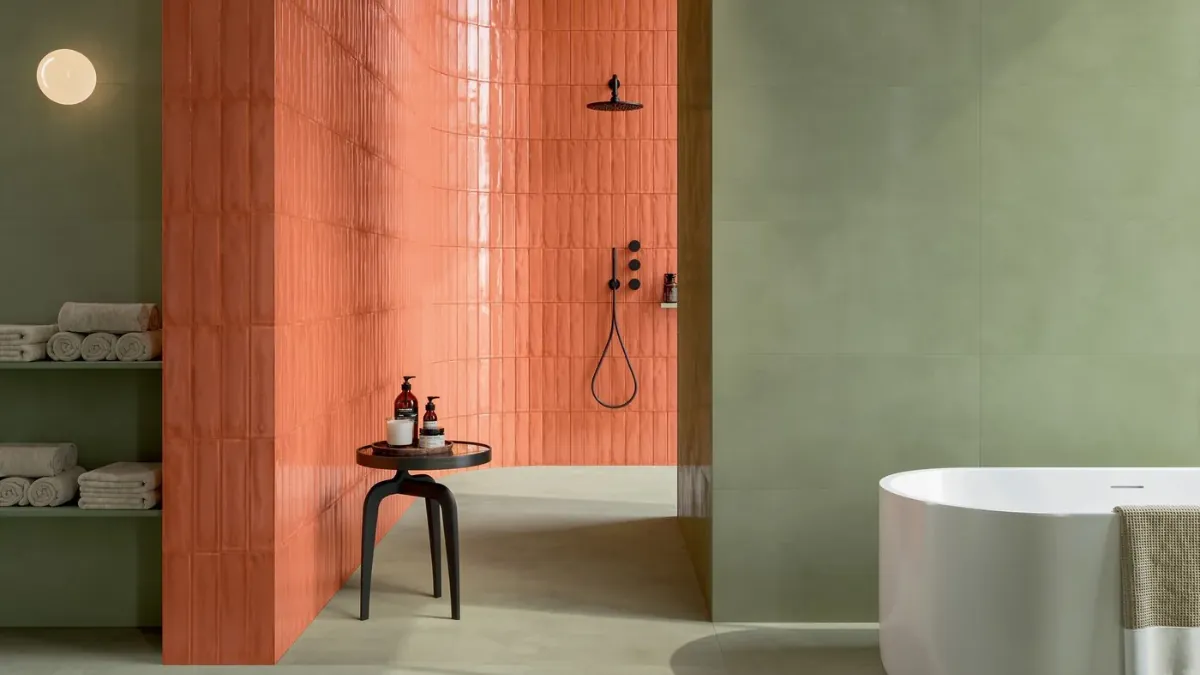
The best tiles for a wet room are large-format porcelain with a slip-rated matt or textured finish (R10-R11, or a PTV of 36+) on the floor, and full-bodied, waterproof porcelain used throughout. Large-format tiles work best on the walls and main floor for a seamless, continuous look, while small-format tiles or mosaics are reserved for the shower and drain-fall zone, where the extra grout lines give the tiler the flexibility needed to create the gentle gradient water needs to drain away properly.
A wet room lives or dies on two things: how it looks, and how safely and effectively it drains. We’ve covered the design and styling side of wet rooms in an earlier guide — this article is its technical companion, focused specifically on the tile specification that makes a wet room perform properly: the right size, the right slip rating, in the right zone. Our design team at Design Di Lusso explains exactly what to specify and why.
Why porcelain is the only serious answer
A wet room floor is, by definition, permanently exposed to standing water — there’s no shower tray or step to contain it. That makes water absorption the single most important technical property of any tile specified. Porcelain’s water absorption sits below 0.5%, the strictest classification in the industry, making it effectively waterproof at the tile level. Natural stone, ceramic and other more porous materials simply aren’t built for this level of sustained water exposure without ongoing sealing and a real risk of long-term water ingress.
What size tiles are best for a wet room floor?
Large-format everywhere, except the drain-fall zone. On the main floor, large-format tiles (600×600mm and above) minimise grout lines for a cleaner, more seamless, more hygienic surface — fewer joints means less grout exposed to constant moisture. In the shower and drain-fall zone, however, small-format tiles or a mosaic are the better technical choice: a rigid large-format tile cannot be cut or laid to follow the subtle, curved gradient a floor needs to channel water toward the drain, while a mosaic’s many small pieces and grout lines give the tiler the flexibility to create that fall accurately.
Slip ratings explained
There are two systems used to measure slip resistance, and it’s worth understanding both:
- R rating (R9-R13) — a ramp test conducted with the test subject wearing shod feet, walking on an inclined, wetted surface. It’s the standard rating quoted by most tile manufacturers.
- PTV (pendulum test value) — a pendulum swings a rubber slider across the wet tile surface, measuring resistance in a way that more closely reflects barefoot use. Because wet rooms are used barefoot, PTV is generally the more relevant measure for this specific application. A PTV of 36 or above is considered low slip risk and the benchmark to look for in a wet room floor tile.
Best tile choice by wet-room zone
| Zone | Format | Finish | Slip rating | Why |
|---|---|---|---|---|
| Main floor | Large-format | Matt / textured | R10-R11 | Fewer grout lines, seamless, hygienic |
| Shower / drain-fall zone | Small-format / mosaic | Matt / textured | R11+, PTV 36+ | Allows tiler to create fall gradient, maximum grip underfoot |
| Walls | Large-format | Matt or polished | Not applicable | Slip rating irrelevant on walls, finish is a style choice |
| Feature / niche | Any | Any | Not applicable | Deliberate design detail, not a walked surface |
| Threshold / entry | Matched to main floor | Matt / textured | R10-R11 | Transition zone, still exposed to water underfoot |
Should walls and floor be the same tile?
Yes — but vary the finish, not the look. Using the same tile design on walls and floor creates the continuous, seamless appearance that defines a good wet room, but the finish should differ by zone: a matt or textured finish on the floor for slip resistance, and the option of a polished or glossier finish on the walls, where grip isn’t a factor and a more reflective surface can add a sense of light and luxury. Many premium ranges offer exactly this — the same design available in both a floor-rated matt finish and a wall-suited polished one.
What about grout and tanking?
Tanking comes first — no tile choice fixes poor tanking. Before any tile is specified, a wet room needs a properly installed waterproof membrane (tanking) across the entire floor and up the walls to shower height. This is what actually keeps water out of the building structure; the tile itself only manages the surface. Skipping or skimping on tanking is the single most common cause of wet room failures, regardless of how good the tile above it is.
Grout is the genuine weak point of any tiled wet room floor. Standard cement grout is porous, and in a permanently wet environment that porosity becomes a real liability — staining, discolouration and potential mould growth over time. For a wet room specifically, we recommend either a stain-resistant sealed grout maintained on a regular schedule, or better still, epoxy grout, which is inherently non-porous and needs no ongoing sealing at all — a detail that removes one of the few remaining maintenance jobs in an otherwise low-maintenance porcelain installation.
Why porcelain beats natural stone in a wet room
Natural stone can look beautiful in a wet room, but it comes with a maintenance burden that’s particularly acute in this application: stone needs sealing on installation and periodically thereafter, and permanent water exposure is exactly the condition most likely to expose any gaps in that sealing over time. Porcelain’s near-zero water absorption removes this risk entirely — there’s no sealant to fail, no schedule to maintain, and no vulnerability to the kind of sustained moisture a wet room floor experiences daily.
Large-format wet room tiles: practical trade-offs
- A genuinely flat substrate is essential — large, rigid tiles cannot follow an uneven floor, and any dip or hump risks lippage and poor water flow toward the drain.
- Skilled installation is non-negotiable — large-format tiling combined with tanking and fall-creation is a specialist job, not a general tiling task.
- Large format complicates falls. This is precisely why the drain-fall zone typically switches to small-format or mosaic — it’s genuinely difficult to create an accurate drainage gradient with large, rigid tiles.
- Buy in one batch. Because a wet room floor and walls typically use the same tile throughout, ensure enough is ordered from a single production batch to avoid subtle shade variation between deliveries.
Where each tile choice would be wrong
- Polished porcelain on the wet room floor — a serious slip hazard in a permanently wet, barefoot environment.
- Large-format tiles in the drain-fall zone — cannot be cut and laid to follow the gradient the drain requires.
- Standard cement grout with no sealing plan in a permanently wet floor — a maintenance problem waiting to happen.
- Natural stone without a rigorous, ongoing sealing regime — the risk of water ingress is highest precisely where the exposure is constant.
- Skipping proper tanking in favour of relying on the tile and grout alone — no surface finish compensates for an unwaterproofed substrate.
Why see wet room tiles before buying
Slip resistance, in particular, is very difficult to judge from a photograph or a small sample — the texture that gives a tile its grip needs to be felt underfoot, ideally wet, to properly assess. Seeing full-size wet room tiles in person, alongside a conversation about tanking and fall design with an experienced team, is the best way to make sure the finished room is as safe as it is beautiful.
Frequently asked questions
What is the best slip rating for a wet room floor?
R10-R11 as a minimum for the main floor, with R11 and above (or a PTV of 36+) recommended for the shower and drain-fall zone specifically.
Can you use large tiles in a wet room?
Yes, on the main floor and walls, but the shower and drain-fall zone typically needs small-format tiles or a mosaic to allow the correct drainage gradient to be created.
Do wet room tiles need to be waterproof?
The tile itself should have very low water absorption — porcelain at below 0.5% is the standard — but waterproofing the room as a whole also depends on proper tanking beneath the tile.
Is porcelain or natural stone better for a wet room?
Porcelain, in almost all cases — its near-zero water absorption removes the ongoing sealing risk that natural stone carries in a permanently wet environment.
What grout is best for a wet room?
Epoxy grout is the strongest choice, as it’s inherently non-porous and needs no ongoing sealing; a stain-resistant sealed cement grout, properly maintained, is the alternative.
Should wet room walls and floor be the same tile?
Generally yes, for a seamless look, though the finish should differ — matt or textured on the floor for grip, with the option of a glossier finish on the walls.
Why do wet rooms use small tiles in the shower area?
Small-format tiles and mosaics have far more grout lines, giving the tiler the flexibility to create the gentle gradient needed to direct water toward the drain — something rigid large-format tiles can’t do.
Does tanking matter more than tile choice in a wet room?
Yes — tanking is what actually waterproofs the room structure. No tile, however impermeable, compensates for an inadequately tanked substrate underneath it.
What is a PTV rating and why does it matter for wet rooms?
PTV (pendulum test value) measures slip resistance in a way that reflects barefoot use, making it especially relevant for wet rooms; a PTV of 36 or higher indicates low slip risk.
A designer’s ideal wet-room tile specification
Large-format porcelain (600×600mm or above) with a matt, textured finish rated R10-R11 across the main floor and walls, dropping to a small-format mosaic in a matching tone within the shower and drain-fall zone for proper gradient control, tied together with epoxy grout throughout, and — critically — a professionally installed tanking membrane beneath the entire floor and up the walls to shower height. Specified this way, a wet room delivers the calm, seamless look of a luxury spa while performing exactly as it needs to, every single day.