
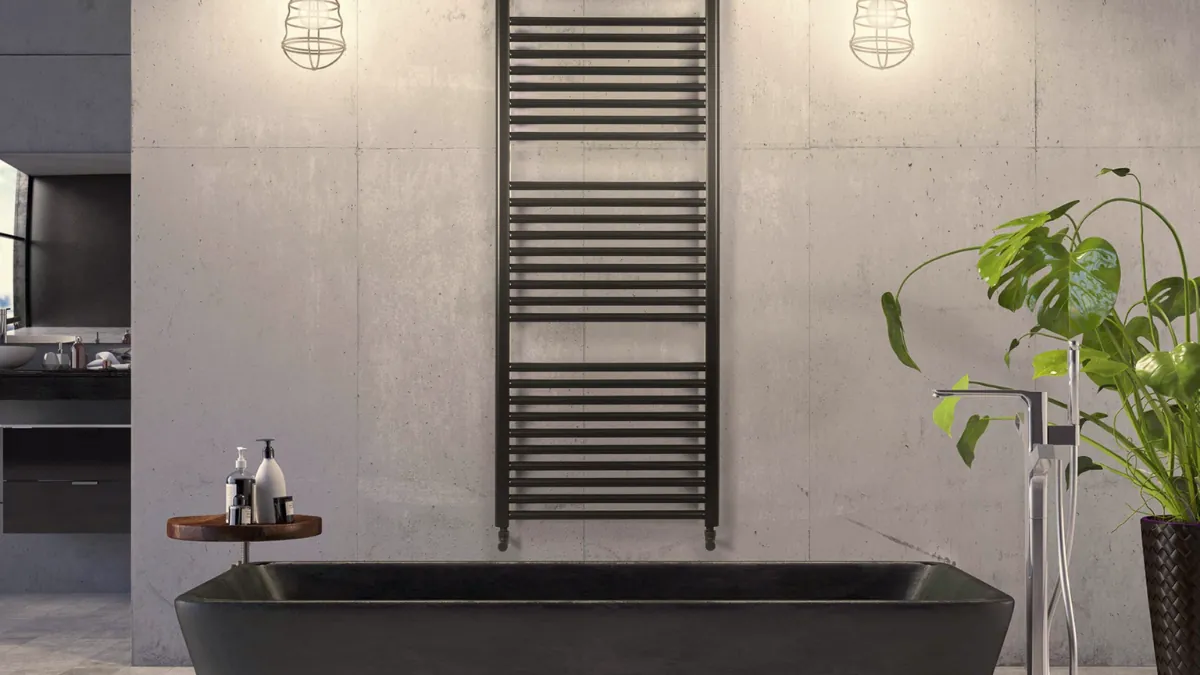
Yes, underfloor heating is worth it under tiles. Tile has high thermal conductivity, making it one of the best-performing floor finishes for UFH — it warms up efficiently and distributes heat evenly across the room, typically running at 25–29°C. Electric (dry) systems suit retrofits and single rooms thanks to their low build-up height and simple installation; water-based (wet) systems suit whole-house projects and new builds, where the lower running cost pays back the higher install cost over time. For a tiled bathroom or kitchen, UFH is one of the most worthwhile upgrades available.
Cold tile underfoot on a winter morning is the single most common objection we hear to specifying a beautiful stone or porcelain floor — and it’s entirely solvable. Underfloor heating and tile are, in fact, an almost perfect pairing: tile’s thermal properties make it one of the best possible surfaces to heat from below, better in some respects than the timber or carpet it often replaces. Our design team at Design Di Lusso explains how UFH works under tile, which system suits which project, and when it genuinely is — and isn’t — worth the investment.
Why tiles are ideal for underfloor heating
Tile — porcelain, ceramic and natural stone alike — has high thermal conductivity, meaning it transfers heat efficiently from the heating element below to the surface you walk on. This gives two practical advantages over other floor finishes: tile heats up faster than materials like timber or carpet, and it distributes that heat more evenly across the whole surface, avoiding the hot-and-cold patches that can occur with less conductive finishes. It’s genuinely one of the best-performing pairings in residential heating.
How UFH works under tiles
Underfloor heating sits beneath the tile, within the floor build-up, and warms the tile itself, which then radiates that heat gently into the room. Rather than the sharp, localised heat of a radiator, UFH provides a soft, even warmth across the entire floor area — the room heats from the ground up, which many people find more comfortable, particularly underfoot in a bathroom or kitchen. A tiled UFH floor typically runs at around 25–29°C, warm enough to remove the “cold tile” feeling entirely without being uncomfortably hot to stand on.
Electric vs water underfloor heating
| Factor | Electric (dry) UFH | Water (wet) UFH |
|---|---|---|
| Install cost | Lower | Higher |
| Running cost | Higher per hour | Lower, especially with a heat pump |
| Best use | Single rooms, bathrooms, retrofits | Whole-house, new build |
| Retrofit-friendliness | Excellent — thin, simple to fit | Poor — needs significant floor build-up |
| Response time | Fast — heats up quickly | Slower — designed to run steadily |
| Build-up height | Minimal (a few mm) | Substantial (pipes plus screed) |
| Ideal pairing | A single bathroom or kitchen refit | New-build or major renovation across multiple rooms |
What does UFH cost to run under tiles?
Running costs depend heavily on the system type, room size, insulation and how the heating is used. As a general pattern: electric UFH costs more to run per hour but is cheap to install, making it economical for a single bathroom used for short bursts each day. Water-based UFH costs more upfront — pipework, manifold and screed all add to the installation — but is significantly cheaper to run over time, particularly when paired with an efficient boiler or heat pump, which is why it’s the default choice for heating an entire home.
Which tiles are best for underfloor heating?
- Porcelain is the top choice — dense, highly thermally conductive, and dimensionally stable under the gentle heat cycles of UFH.
- Natural stone also performs well thermally, though it carries the additional maintenance of sealing that porcelain doesn’t need.
- Stone- and wood-effect porcelain combine the conductivity of porcelain with the warmth and character of a natural material look — a particularly strong pairing with UFH, since it solves wood’s “cold underfoot” limitation entirely.
- Ceramic is also UFH-compatible, though generally less thermally efficient and less durable over the long term than porcelain.
Which floor finishes to avoid with UFH
- Solid natural wood is the worst pairing — timber’s natural movement with heat and humidity risks warping, cupping and gapping over repeated heating cycles.
- Thick carpet acts as an insulator, trapping heat beneath the surface rather than letting it radiate into the room, which significantly undermines UFH’s efficiency.
- Vinyl and LVT can be used with UFH but typically have a maximum surface temperature they can tolerate, which limits how much heat output the system can safely deliver.
Is UFH worth it in a bathroom specifically?
Yes — bathrooms are arguably where UFH delivers the most day-to-day benefit. Beyond comfort underfoot, removing a bulky radiator frees up wall space and design freedom, opening up options for a longer vanity run, a feature wall or simply a cleaner, less cluttered layout. UFH also helps a tiled bathroom dry out faster after use, which can support a drier, more hygienic environment over time.
When is UFH genuinely not worth it?
- You’re not re-tiling. Retrofitting UFH beneath an existing floor you’re not otherwise lifting rarely makes financial sense.
- You’re set on an insulating floor finish such as thick carpet, where UFH’s efficiency is significantly undermined regardless of system quality.
- A large electric system running all day. Electric UFH is excellent for a single room used in bursts, but becomes expensive to run continuously across a large area — that’s a job for a water-based system.
- Tight floor-height constraints where even a low-profile electric system can’t be accommodated without creating problems at doorways or thresholds.
Frequently asked questions
Is underfloor heating worth it under porcelain tiles?
Yes — porcelain’s high thermal conductivity makes it one of the best-performing floor finishes for UFH, heating up efficiently and distributing warmth evenly across the room.
Is electric or water underfloor heating better for a bathroom?
Electric UFH is usually the better fit for a single bathroom, thanks to its low installation cost, minimal build-up height and fast heat-up time — ideal for a retrofit.
How warm does a tiled underfloor heating system get?
Typically around 25–29°C at the tile surface — warm enough to fully remove the sensation of cold tile without feeling uncomfortably hot underfoot.
Can you put underfloor heating under natural stone tiles?
Yes, natural stone performs well thermally under UFH, though it requires the additional maintenance of sealing that porcelain does not.
Does underfloor heating damage tiles over time?
No, provided the system and installation are specified correctly — porcelain and most natural stone are dimensionally stable under the gentle, gradual heat cycles UFH produces.
Is underfloor heating expensive to run under tiles?
It varies by system: electric UFH costs more per hour but suits short daily use in one room; water-based UFH costs less to run and suits continuous whole-house heating, particularly with an efficient boiler or heat pump.
Can you retrofit underfloor heating under an existing tiled floor?
Only by lifting the existing tiles and floor build-up first — electric systems are the more practical retrofit option due to their minimal height, but the floor must be relaid regardless.
Does underfloor heating work well with wood-effect tiles?
Very well — it combines the visual warmth and character of a wood-effect finish with porcelain’s thermal conductivity, solving real timber’s main limitation of feeling cold underfoot.
The bottom line
Underfloor heating under tile is one of the highest-comfort upgrades available for a bathroom or kitchen, thanks to tile’s naturally high thermal conductivity. Electric systems suit single-room retrofits, water-based systems suit whole-house new builds, and either way the “cold tile” objection that puts people off a beautiful stone or porcelain floor disappears entirely. Our design team can help you match the right system, tile and layout to your specific project.