
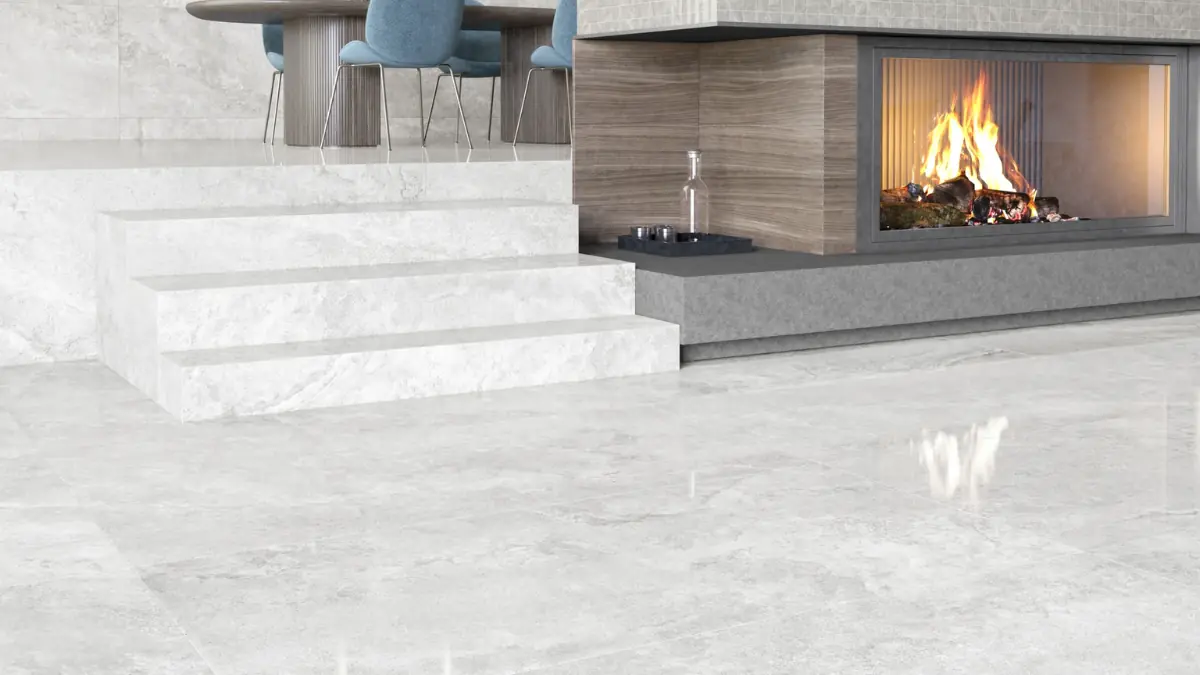
No, glazed porcelain tiles do not need sealing. With water absorption below 0.5%, glazed porcelain is effectively waterproof straight from the factory, so there is no porous surface for a sealant to protect. The nuances: unglazed or polished porcelain can benefit from an optional stain-resistant treatment, and cement-based grout — unlike the tile itself — often does benefit from sealing or an epoxy formulation, especially in wet areas like showers and wet rooms. Confusing the tile with the grout is where most sealing myths come from.
It’s a question we hear constantly in the showroom, usually from someone who has just fitted natural stone in a previous home and assumes every tile needs the same annual maintenance ritual. The honest answer is reassuringly simple, but it’s worth understanding why porcelain behaves so differently, where the real maintenance job actually lies, and when sealing genuinely is worth doing. Our design team at Design Di Lusso explains it all below.
What does “sealing” actually do?
Sealing exists to solve one problem: porosity. A sealant fills the microscopic pores in a porous material so that water, oil and staining agents can’t soak in and take hold. Think of it as the difference between a sponge and a sheet of glass.
A sponge (like unsealed natural stone) has an open structure that readily absorbs liquid — spill red wine on it and it will stain deep into the material unless a sealant has filled those pores first. A sheet of glass has no meaningful porosity at all — liquid simply sits on the surface until you wipe it away. Fired, glazed porcelain behaves far closer to glass than to sponge, which is exactly why sealing brings nothing to the table.
Are porcelain tiles waterproof?
Yes — glazed porcelain has a water absorption rate of less than 0.5%, the strictest classification in the tile industry (BIa, fully vitrified). That figure comes from the manufacturing process: porcelain clay is fired at extremely high temperatures, which vitrifies the body and makes it dense and essentially non-porous.
It’s important to separate two different things, though: the tile being waterproof, and the installation being waterproof. A wet room or shower still needs proper tanking (a waterproof membrane) beneath the tiles — no tile, however impermeable, compensates for a poorly waterproofed substrate. The tile keeps water off the surface; tanking keeps water out of the building.
Glazed vs unglazed porcelain: a key distinction
Most of the confusion around sealing porcelain comes from not distinguishing between the two main finishes.
- Glazed porcelain has a hard, liquid-glass coating fired onto the surface. This layer is completely non-porous and needs no sealing, full stop.
- Unglazed / polished (full-body) porcelain has no separate glaze layer — the colour runs through the body, and the surface is mechanically polished to a shine. Polishing can micro-open the surface slightly, so some manufacturers recommend an optional stain-resistant treatment, particularly before grouting, to prevent grout haze or pigment bedding into the pores during installation.
The vast majority of tiles specified for bathrooms and kitchens — wood-effect, marble-effect and stone-effect porcelain included — are glazed, matt or satin-finished, and need no treatment at all.
Do porcelain floor tiles need sealing?
No, not the tile itself. Two separate issues sometimes get mistaken for a “sealing problem” on porcelain floors:
- Grout haze — a cloudy residue left after installation, caused by grout not being cleaned off the tile surface properly. This is fixed with a proper haze-removal clean, not a sealant.
- Grout joints — the grout lines between tiles, which are a genuinely porous cement-based material and are the actual candidate for sealing (see below).
Porcelain vs natural stone: sealing needed?
The comparison table below makes clear why porcelain has become the low-maintenance choice for luxury bathrooms.
| Material | Sealing needed? | Why |
|---|---|---|
| Glazed porcelain | No | Water absorption <0.5%, fully vitrified |
| Unglazed / polished porcelain | Optional | Slight surface porosity from polishing |
| Marble | Yes, ongoing | Naturally porous, absorbs stains and etches |
| Limestone / travertine | Yes, ongoing | Highly porous, softer stone |
| Slate | Usually | Porosity varies by quarry, generally benefits |
| Granite | Sometimes | Dense but can still stain without treatment |
| Cement tiles | Yes | Porous cement body, needs sealing before grouting and periodically after |
| Cement grout (any tile) | Yes, in wet areas | Porous by nature — the real sealing job |
Do you need to seal porcelain grout?
Yes — this is the maintenance step people overlook. Standard cement-based grout is porous, regardless of how impermeable the tile itself is, and in wet areas it can absorb moisture, discolour and support mould growth over time. There are two ways to handle it:
- Seal the grout with a penetrating grout sealer, typically reapplied every 12–24 months in wet zones.
- Use epoxy grout instead of standard cement grout. Epoxy grout is inherently non-porous, stain-resistant and never needs sealing — a popular specification for showers and wet rooms precisely because it removes this maintenance job entirely.
What happens if you seal glazed porcelain anyway?
Nothing good. Because there are no pores for the sealant to soak into, it simply sits on top of the glazed surface as a film. At best it does nothing; at worst it dries into a hazy, streaky residue that dulls the tile’s finish and is genuinely difficult to remove. If a fitter or product recommends sealing glazed porcelain, it’s worth asking why — there is no technical benefit, only a cosmetic risk.
How to actually care for porcelain tiles
Porcelain’s real maintenance routine is refreshingly simple:
- Sweep or vacuum regularly to remove grit that could scratch the surface underfoot over time.
- Mop with a pH-neutral cleaner — avoid harsh acidic or alkaline products, which can dull some glazes over years of use.
- Avoid wax-based or oil-based cleaning products, which can leave a residue or streaky film on a glazed surface.
- Clean grout lines periodically, particularly in wet areas, and reseal or refresh as needed.
That’s it — no annual resealing schedule, no specialist stone-care products, no anxiety about a forgotten wine glass on the bathroom floor.
When is sealing genuinely worth it?
To bring it all together, here’s when a sealant actually earns its place in a porcelain installation:
- Cement grout in wet areas — showers, wet rooms, splashbacks — where ongoing moisture exposure makes porous grout a real risk.
- Polished porcelain pre-grouting — an optional stain-resistant treatment before grout is applied, to prevent pigment bedding into a polished surface.
- Unglazed porcelain in heavy-traffic zones, where a manufacturer specifically recommends it.
- Natural stone, always — marble, limestone, travertine and most slate are genuinely porous and need sealing on installation and periodically thereafter.
Outside of these cases, glazed porcelain — the finish specified in the overwhelming majority of luxury bathroom and kitchen projects — needs no sealing at all.
Frequently asked questions
Do porcelain tiles need sealing before grouting?
Glazed porcelain does not. Unglazed or polished porcelain can optionally take a stain-resistant pre-grout treatment to prevent pigment bedding into the slightly more open surface created by polishing.
Does porcelain grout need sealing?
Yes, if it’s a standard cement-based grout, particularly in wet areas. Alternatively, specifying epoxy grout removes the need for sealing altogether, since epoxy is inherently non-porous.
Can you seal porcelain tiles by mistake and cause damage?
You can’t damage the tile itself, but sealing glazed porcelain unnecessarily can leave a hazy, streaky film on the surface, since the sealant has nowhere to absorb into and simply sits on top.
Is unsealed porcelain waterproof?
Yes. Glazed porcelain has a water absorption rate below 0.5% straight from the factory — sealing adds nothing to its waterproofing, which comes from the vitrified body and fired glaze, not a topical treatment.
Do outdoor porcelain tiles need sealing?
No, the tile itself doesn’t. As with indoor porcelain, any cement grout used outdoors should be sealed or replaced with a suitable weatherproof jointing compound, since it’s the grout — not the tile — that’s exposed to the elements.
How often should porcelain grout be sealed?
Typically every 12–24 months in wet areas such as showers, though this varies by product and usage. Specifying epoxy grout at installation avoids this ongoing maintenance entirely.
Does polished porcelain need sealing?
It can benefit from an optional stain-resistant treatment because polishing slightly opens the surface, but this is a precaution rather than a necessity — it is not comparable to the mandatory, ongoing sealing that natural stone requires.
Why do people think porcelain needs sealing?
Usually because they’re carrying over habits from natural stone, or because grout — which genuinely does need attention — gets mentally lumped in with the tile itself.
The bottom line
Seal the grout, not the tile. Glazed porcelain’s near-zero water absorption means it never needs sealing, wherever it’s installed. The only genuine maintenance job in a porcelain bathroom or kitchen is keeping cement grout protected in wet areas — or sidestepping that job entirely by specifying epoxy grout from the start. Get the grout choice right at installation, and a porcelain floor or wall genuinely becomes one of the lowest-maintenance surfaces in the home.
If you’re specifying porcelain, grout and finish for a new bathroom or kitchen and want it right first time, our design team can talk you through the options in person.