
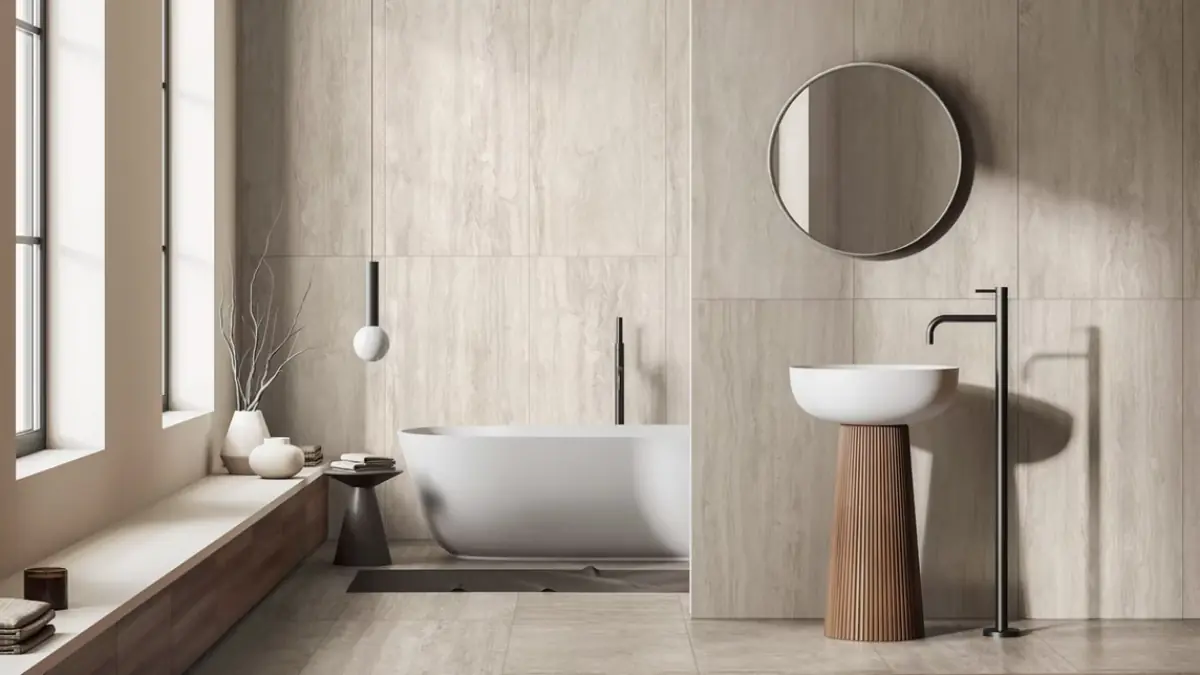
Travertine and natural stone effect porcelain tiles give you the warm, organic, characterful look of real travertine and limestone in a fired porcelain tile that is virtually non-porous, hard-wearing and almost maintenance-free, with none of natural stone’s sealing, etching or water-sensitivity. Natural travertine and stone are beautiful but porous, which makes them vulnerable to water and stains and a constant maintenance task in a bathroom; stone effect porcelain captures the same soft, earthy tones and textured surface without that upkeep. For a warm, spa-like, Mediterranean or rustic-luxe scheme, it is our go-to recommendation: the timeless beauty of stone, built for real, used bathrooms. This guide covers where it works, the finishes to choose, and how to get a premium result.
There is something uniquely calming about natural stone. Travertine in particular, with its warm creams, honeys and soft golds and its gently textured surface, has been used in architecture for thousands of years and never looks dated. The catch has always been practicality. Real stone is porous, high-maintenance and easily damaged by the water and products a bathroom throws at it. Natural stone effect porcelain resolves that tension completely, and it has become one of the most popular luxury looks we are asked for.
What is natural stone effect porcelain?
Natural stone effect porcelain tiles are fired porcelain tiles, printed and textured to replicate the appearance of natural stone — travertine, limestone, and other soft, organic stones. The best ranges reproduce the subtle colour variation, the gentle veining and the tactile, lightly textured surface of real stone, with multiple unique faces so the pattern does not obviously repeat.
The difference from the real thing is performance. Because these are porcelain, they are:
- Virtually non-porous and water-resistant, ideal for bathrooms, wet rooms and showers.
- Stain-resistant, where natural travertine stains and etches easily.
- Hard-wearing and durable, standing up to heavy use for decades.
- Low maintenance, with no sealing required, just normal cleaning.
So you get the warm, natural look of travertine and stone, in a tile that thrives in exactly the wet, busy rooms where real stone struggles.
Why people love the travertine and natural stone look
Natural stone effect appeals because it brings warmth and a sense of nature into a room in a way that cooler, more uniform materials cannot. Its soft, earthy palette — creams, beiges, honeys and walnut tones — feels organic, calming and timeless. The subtle texture catches light gently and adds depth. It is the signature look of:
- Spa and wellness bathrooms, where its softness creates a genuinely relaxing, retreat-like atmosphere.
- Mediterranean and rustic-luxe interiors, where it is the defining material.
- Natural-material palettes, pairing beautifully with wood-effect tiles, natural timber, rattan and organic textures for a biophilic feel.
Because it is timeless rather than trend-led, it is also a safe long-term choice. A natural stone effect bathroom will look as right in ten years as it does today.
Where natural stone effect porcelain works best
Bathrooms and ensuites
This is the heart of it. Natural stone effect porcelain brings a warm, spa-like calm to a bathroom while being fully water-resistant and easy to care for. Run it across floors and walls for a soft, enveloping, hotel-spa feel, or use it as a warm backdrop to a statement bath.
Wet rooms and showers
With a textured, slip-resistant finish, natural stone effect porcelain is ideal for wet rooms and shower floors. You get the natural look and reasonable grip underfoot, with full water resistance — something natural travertine cannot safely offer without constant sealing.
Feature walls
A wall of textured stone effect porcelain behind a bath or vanity adds warmth and tactility as a counterpoint to smoother surfaces, anchoring the room in a natural, considered way.
Kitchens, hallways and living spaces
Beyond the bathroom, natural stone effect porcelain makes a warm, durable, easy-to-clean floor for kitchens, hallways and open-plan living, bringing the same organic character to the wider home.
Travertine effect vs other stone effects
“Natural stone effect” covers a family of looks, each with a slightly different character:
| Effect | Character | Best for |
|---|---|---|
| Travertine effect | Warm, honeyed, lightly pitted, Mediterranean | Spa bathrooms, rustic-luxe schemes |
| Limestone effect | Soft, pale, fine, understated | Calm, contemporary, minimalist rooms |
| Split-face / textured stone | Rugged, dimensional, dramatic | Feature walls, statement spaces |
| Sandstone / weathered stone | Earthy, natural, outdoor feel | Indoor-outdoor flow, garden rooms |
Travertine effect is the warmest and most characterful, which is why it is so popular for spa-style bathrooms. Limestone effect is softer and more understated for a calmer, more contemporary look. Your choice comes down to how warm and how textured you want the room to feel.
Finishes: getting the look and the safety right
The finish of a natural stone effect porcelain tile matters for both appearance and practicality:
- Matt and textured finishes are the most natural-looking and the most practical, offering grip underfoot, which is important for bathroom and wet room floors.
- Honed and satin finishes give a smoother, slightly more refined surface, lovely on walls.
- Textured “grip” versions of a floor tile are specified for wet areas, often alongside a smoother version of the same tile on the walls, so you get safety underfoot and a cohesive look throughout.
For a bathroom, our designers typically specify a textured floor tile for grip with a matching wall tile, giving a seamless, natural, and safe result.
Colours and tones
Natural stone effect porcelain sits in a warm, earthy palette, and the tone sets the mood:
- Cream and ivory, bright, soft and timeless, keeping a room open and airy.
- Honey and warm beige, the classic travertine warmth, cosy and inviting.
- Greige and soft grey-beige, a contemporary, versatile middle ground.
- Walnut and darker stone, richer and more dramatic, best in larger or well-lit rooms.
Lighter tones keep a bathroom feeling spacious and serene; warmer and darker tones make it feel cosier and more enveloping. The right choice depends on the room’s size, light and the atmosphere you want.
Pairing natural stone effect with other materials
Natural stone effect porcelain is a wonderful team player. Combinations our designers love:
- Stone effect walls with a herringbone wood effect floor, a warm, natural, spa-like scheme that feels organic and inviting.
- Stone effect porcelain with marble-effect feature areas, soft natural texture against elegant veined luxury.
- Stone effect throughout with brushed brass or bronze fittings, the warm metals flatter the earthy tones beautifully.
The natural, understated character of stone effect makes it an ideal backdrop — warm and calming — that lets fittings, brassware and a single feature shine.
Why porcelain beats real travertine and stone
This is the crucial point. Natural travertine and stone are genuinely beautiful, but as a bathroom surface they are demanding. They are porous, so they absorb water and stain, and they etch when they meet acids (including everyday products). They need sealing on installation and periodically afterwards, and careful, pH-neutral cleaning for life. In a wet, frequently used bathroom, that is real, ongoing work, and even then the stone is vulnerable.
Natural stone effect porcelain gives you the same warm, organic appearance — the colour, the veining, the texture — in a material that is virtually non-porous, stain-resistant, hard-wearing and needs no sealing. Many people genuinely cannot tell the difference once it is installed, until they consider how little maintenance it needs. For a warm, natural bathroom that also performs and lasts, it is hard to recommend anything else. Natural stone still has its place in dry, low-use areas for those who specifically want the real material and accept its upkeep, but for bathrooms, porcelain wins.
How to tell a quality natural stone effect tile
Not all stone effect porcelain is equal, and the difference is obvious in person:
- Number of unique faces. Premium ranges have many faces so the floor looks naturally varied, like real stone. Cheap tiles repeat the same few prints, so the pattern visibly tiles.
- Realism of texture and tone. Better tiles have subtle, layered colour variation and a convincing surface texture. Cheap ones look flat and obviously printed.
- Rectified edges. Precision-cut edges allow the tightest, most seamless grout lines.
- Through-body quality. Denser, better porcelain is more durable and feels more substantial.
These differences are hard to judge from a website photo and instantly clear in a showroom, which is one of the main reasons we encourage clients to see ranges in person.
Caring for natural stone effect porcelain
This is where porcelain shines: there is almost nothing to do. No sealing, no special stone products, just regular cleaning with a pH-neutral cleaner. It will not stain, etch or water-damage the way real travertine does. In a bathroom, wiping down wet surfaces and good ventilation keep limescale at bay in hard-water areas, but otherwise a natural stone effect porcelain floor or wall stays beautiful for decades with minimal effort — the look of natural stone, with none of the upkeep.
Design styles that suit natural stone effect porcelain
One of the strengths of natural stone effect porcelain is how well it adapts to different interior styles:
- Spa and wellness. Warm travertine tones across floor and walls, paired with wood-effect accents, soft lighting and a freestanding bath, create a genuinely restful, retreat-like bathroom. This is the style natural stone effect does best.
- Mediterranean and rustic-luxe. Honeyed travertine effect with textured finishes, brass fittings and natural materials evokes a sun-warmed, characterful, relaxed luxury.
- Contemporary natural. Cooler limestone or greige stone effect, kept smooth and minimal, gives a calm, modern, understated look that still feels warm and organic rather than clinical.
- Biophilic. Natural stone effect is a cornerstone of the biophilic trend, bringing nature indoors. Paired with wood-effect tiles, real plants and natural light, it creates a calming, nature-connected space.
Whatever the style, the common thread is warmth and calm. Natural stone effect porcelain brings a softness and a connection to nature that cooler, more uniform materials struggle to match.
Creating indoor-outdoor flow
A particularly effective use of natural stone effect porcelain is to create a seamless flow between inside and out. Many ranges offer a matching outdoor tile (typically a thicker, more textured 20mm version for patios and terraces) alongside the indoor tile. Running the same stone effect from an indoor living space out onto a terrace blurs the boundary between the two, makes both spaces feel larger, and creates a calm, cohesive, high-end result. For a home with bi-fold or sliding doors onto a garden, this indoor-outdoor continuity is one of the most luxurious things you can do, and natural stone effect, with its organic, garden-friendly character, is ideal for it.
Maintenance over the years: stone effect vs real stone
It is easy to focus on how a tile looks on day one, but the more important question is how it looks — and how much work it is — five or ten years in. Natural stone effect porcelain looks essentially the same in year ten as on day one, with nothing more than normal cleaning. Real travertine and stone, by contrast, will have needed sealing more than once, careful cleaning to avoid etching, and prompt attention to spills; cared for diligently it develops a lovely patina, but neglected it can stain, dull and mark. This long-term difference is the single biggest practical reason we steer most bathroom clients towards stone effect porcelain. It gives the warm, natural look they love and still looks beautiful, with almost no effort, years later.
A buyer’s checklist for natural stone effect porcelain
Before choosing, run through these decisions with your designer:
- Travertine effect or another stone effect? Travertine for warmth and character; limestone for a softer, cooler, more contemporary look.
- Tone. Lighter creams and honeys to keep a room open and airy; warmer or darker tones for a cosier, more enveloping feel.
- Finish. A textured, slip-resistant finish for any floor that gets wet; smoother honed or satin finishes are lovely on walls.
- Where it is going. Floor, walls, or both, and whether any of it is a wet area (which dictates the finish).
- Quality. Choose a range with many unique faces and realistic texture so it looks like genuine, varied stone rather than an obvious print.
- Pairings. Decide the wood-effect, marble-effect or fittings that will sit alongside it, so the whole scheme is coordinated.
- See it in person. Texture, warmth and realism never translate fully through a screen. View samples at the size and under the light of your actual room.
Common mistakes to avoid
Natural stone effect porcelain is forgiving, but a few choices make the difference between a warm, convincing result and a flat, underwhelming one:
- Choosing a cheap range with few faces. This is the most common error. Budget tiles repeat the same two or three prints, so the pattern visibly tiles across the floor and the illusion of natural stone collapses. A quality range with many unique faces looks genuinely varied.
- A smooth floor in a wet area. For bathroom and wet room floors, specify a textured, slip-resistant finish, not a smooth one, for safety underfoot.
- Cool grout against warm stone. A grout tone matched to the tile keeps the look natural and seamless. A stark, contrasting grout fights the warm, organic character.
- Over-lighting with cool light. Natural stone effect comes alive under warm light, which flatters its honey and beige tones. Harsh, cool lighting can drain the warmth that makes it special.
- Forgetting to coordinate. Stone effect is a backdrop, so choose the fittings, brassware and any feature material alongside it, so the whole scheme feels intentional.
Avoid these, and natural stone effect porcelain delivers exactly what people love about it: warmth, calm and timeless natural character, with none of the upkeep of real stone.
Bringing your scheme together
The most successful natural stone effect schemes follow a simple principle: let the warmth and texture of the stone be the calming foundation, then add one or two carefully chosen elements on top. That might be a herringbone wood effect floor beneath stone effect walls, a single marble-effect feature against a stone effect backdrop, or warm brass fittings that pick up the honeyed tones. Keep the palette warm and coordinated, choose a quality range so the stone looks genuinely natural, get the finish right for safety, and you have a bathroom that feels like a warm, natural retreat — and that stays beautiful and easy to live with for years to come.
Frequently asked questions
Are natural stone effect tiles good for bathrooms?
Yes. Natural stone effect porcelain is virtually non-porous, water-resistant and low maintenance, making it ideal for bathrooms and wet rooms, with the warm, natural look of real stone but none of the sealing and staining problems.
What is the difference between travertine and natural stone effect porcelain?
Travertine is a natural stone, warm and characterful but porous, needing sealing and careful care. Natural stone effect porcelain replicates that warm, travertine-style look in a fired porcelain tile that is non-porous, hard-wearing and needs no sealing — far better suited to a bathroom.
Does natural stone effect porcelain need sealing?
No. Unlike real travertine and stone, natural stone effect porcelain is virtually non-porous and never needs sealing — just normal cleaning. This is one of its biggest advantages over the natural material.
Is travertine effect porcelain as nice as real travertine?
Premium travertine effect porcelain is remarkably close to the real thing, with multiple unique faces, subtle tonal variation and textured finishes. Many people cannot tell the difference once it is installed, and it performs far better in a bathroom.
Which natural stone effect is best for a spa bathroom?
Travertine effect, for its warm, honeyed, organic character, is the classic choice for a spa-style bathroom, ideally paired with wood-effect or other natural materials.
Can natural stone effect porcelain be used on shower floors?
Yes, with a textured, slip-resistant finish it is ideal for shower and wet room floors, giving the natural look with grip underfoot and full water resistance.
Is natural stone effect porcelain expensive?
It sits in the premium tile bracket, but costs far less to live with than real stone, which needs sealing and ongoing care. For the look of natural stone with porcelain practicality, it offers excellent long-term value.
What colour grout works best with natural stone effect porcelain?
A grout close to the mid-tone of the tile almost always looks best, because it lets the stone read as a continuous, natural surface rather than a grid. With warm travertine effect tiles that means a soft beige, greige or sand grout — not stark white or dark charcoal. On large floors or wet areas, a warmer mid-tone also hides watermarks and everyday wear. Always compare tile and grout samples under the room’s own lighting before committing.
See travertine and natural stone effect porcelain at our Watford showroom
The warmth, texture and realism of natural stone effect porcelain are things you really need to see and touch — photographs never quite capture them. Visit our Watford showroom to explore travertine and natural stone effect ranges in a variety of tones and finishes, and let our award-winning team help you choose the right look for your bathroom or wider home.